
Erick van Egeraat beyond architecture
Erick van Egeraat is a Dutch architect and author. He heads the architectural practice based in Rotterdam with offices in Moscow, Budapest and Prague. He is the winner of RIBA Award 2007, Best Building Award 2011 & 2012 and European Property Award 2013.
Six Ideas About Architecture – Texts by Deyan Sudjic for Erick van Egeraat Associated Architects
22 July 2026WATCH ERICK VAN EGERAAT’S LATEST LECTURE ON SHAREarchitects.com
04 June 2020DIGRESSOR OF NORMS
22 November 2017Erick van Egeraat in dialogue on 100th Catholic Day in Leipzig
30 May 2016Column: Thoughts from an Architect
27 May 2016Column: Value (f)or Money
Column: Life without Beauty
Grigory Revzin: The Street Leading Upwards
16 February 2016De hele wereld loopt sneller dan Nederland
07 December 2015Making affordable housing more attractive
06 November 2015We leven in het Luxe Tijdperk, en daar bouw ik naar
03 September 2015Interview: Russia can do much better, with or without international support
01 August 2015Interview: Waarom architect Erick van Egeraat successvol is in Rusland
29 June 2015Effortless Everywhere
24 June 2015Luxury living concept in Mercury Tower, Moscow
14 June 2015Memories for the Future
01 June 2015Interview: New Impulses
14 April 2015Galvanize the City
07 March 2015Nieuw stadion Feyenoord wordt gegarandeerd een kutgebouw
01 March 2015Interview: Tastes differ
19 February 2015Interview: If you think I’m genius, I wouldn’t mind
14 November 2014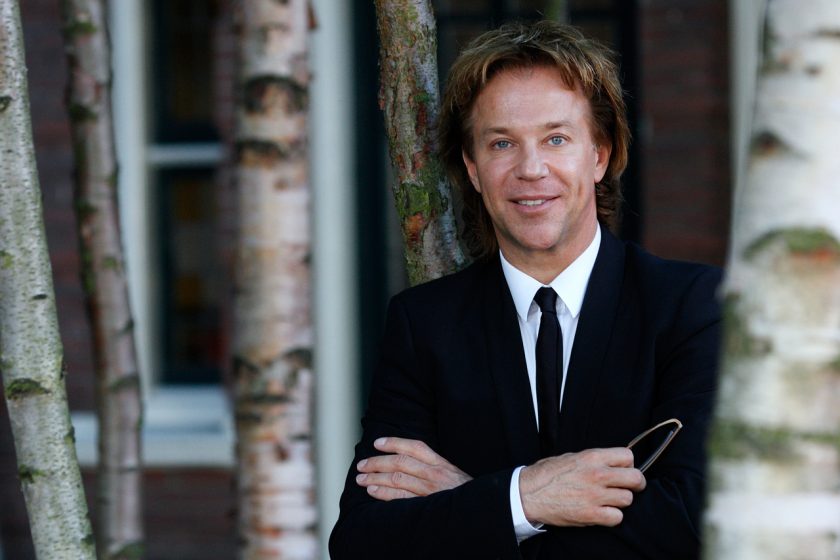
Interview: If you think I’m genius, I wouldn’t mind
Friday, 14 November 2014Lydia Pakhomova interviews Erick van Egeraat for Lenta.ru, click here for the original article (in Russian).
The architect Erick van Egeraat and his team create and materialize unique projects of the highest complexity and quality all over the world. They can design public spaces in Saudi Arabia and build an incineration factory in Denmark, they know about chess and Russian frost, they understand needs of German students and bank operations in Hungary…
What do you think about the changes that happened to Moscow in last 5 years?
Moscow is becoming an attractive city. Attention to public spaces in the city center has proved very useful; pedestrian areas, effective use of space, development of parks, even reduction of parking zones (I don´t know where they park cars now, but I can see that they don´t do it on every street anymore). Being sharply critical, I could say that nothing has been done outside the city center, that the city beyond the garden ring has been completely ignored. But everyone who works in my sphere knows how many steps one should take before achieving any result.
What do you like in Moscow?
I like that it embraces so many different things: this huge city bustling with energy accommodates numerous spaces of different character and peculiar charm. I also like its circular structure which makes the city easy to navigate. Another advantage is diversity of architectural styles…
What´s your opinion about Moscow-City?
It´s a predictable result of following an international trend. Moscow City is quite an «extreme» (that is to say: unnatural) area due to prevalence of high-rise buildings. Being a harbor, or a yard for construction of modern sky-scrapers, it is dramatically different from the rest of Moscow: what you can do here, you are not allowed to do anywhere else. That is how it looks. Frankly, it is a very bad part of Moscow. I know what I am talking about, because I worked on two buildings there.
At the same time I think that Moscow City will gradually become a very interesting part of Moscow. Today it looks unattractive: construction sites, unwise distribution of functions, transport problems… But it is getting «populated», people are coming here to live and work, restaurants are opening. The area is becoming a living part of the city.
It will never be beautiful. But this is not a measure of success. Success of a city is measured by its stamina, and above all – by its ability to change constantly. In this aspect New-York is very interesting; they have demolished a lot there, but now it´s a city with a green park, charmingly intertwined old and new developments, offices and residences, with a host of co-existing alternative lifestyles.
Which urban-planning mistakes are being made in Moscow nowadays?
The biggest mistake is extension of Moscow. I don´t mind the idea of city expansion, but we have to be very cautious here. City character is changing and it causes many infrastructural problems, which can only be solved with help of specially allocated budget. Simply to increase area of commercial development is a bad idea. It would probably be more beneficial to invest this money in development of metro network and solution of existing infrastructural problems.
Speaking of problems… Sometimes one has a feeling that construction in Moscow is not in the hands of competent professionals. Or is it not the case? What do you think about quality of work of our builders? Do you find quality of their work and construction materials satisfactory?
During the last years I have repeatedly criticized the quality of construction work in Russia. I was full of doubt. I went as far as questioning the possibility to build anything worthy at all here. Although I am not ready to renounce my criticism completely, I also see positive instances now. I have built the trade center in Surgut and it still makes me proud, because due to its construction quality it stands in line with the best trade centers in the world. One of the problems is that one has to import most of components. There is no local industry to supply materials of proper quality.
In a nutshell, I can say that in Russia I probably build even better than in other countries, but it requires much more energy and efforts.
If you were to build your own city, which principles you would put in its foundation? Where would you build it?
(sighs). I don´t think I have an answer to your second question. Almost every day we discuss with my wife where we would like to live. So far we haven´t found a place in the world where we´d like to settle. Perhaps, we are just used to virtually infinite diversity of choice.
As for construction of the city, I would do as the others do. I would take a little bit of everything: from magnificent sunset to crazy mall, from park to mountain, from freely flowing river to canal. I would not like to live in a city based on one thing, be it a beautiful alley, wood or anything else… Although other people could find it very attractive.
Changing of ideas is important. After the second world war ideal lifestyle was about having your own house or datcha. People started to think about it from a very young age. But this craving for stability is out of sync with modernity – today the young people look for diversity and prefer to think in short-term perspective. This is a modern `way` of living – at least for those who can afford it.
What would you recommend to specialists dealing with development of existing Russian cities?
I don´t want to be a pedant who is busy with nitpicking and claiming that Russian urban planners of today are not good enough in their work. There were times when all cities were planned for 5–10 years ahead. It had a strong point, as planning concerned everything, from schools to housing and factories. Now the leading tendency is to establish one important aspect as a cornerstone, to consider only one participant of future city life. I think urban-planners should include variety of factors in their scope of work. This is very difficult, especially in Russia where the entire mechanism of making urban-planning decisions stays undisclosed.
From European point of view Russia is an extreme place where everything, from people´s lifestyle and prevalent opinions to their behaviors is quite unusual. That´s what attracts me to Russia, but other people can be repelled by it. I never judge people for being or thinking different. It doesn´t mean that I accept their rules. But I don´t think that my moral task is to change the course of things as it´s established in other societies.
I am more interested to add to such a society something from my own experience and expertise which does not fly in the face of its culture and traditions. It´s a delicate subject: it is important not to turn into a self-proclaimed missionary.
How will the cities look in 50 years?
For the last 100 years cities have been developing from top to bottom, starting from big plan which laid a basis for all subsequent works. This way of work will stay in 50 years ; it is suitable for creating ready-made cities.
At the same time further development of existing cities will originate in private initiatives of individuals – citizens will get together and decide how to organize their own street or arrange a park.
A direction of cities´ development which I find particularly compelling is to build blocks of apartments, offices, restaurants and educational facilities. It is very popular in Western Europe. These projects are usually created by small groups of people who raise funds, organize financing and subsequently manage their «micro-town».
Future cities will become more «realistic» from planning point of view. Planning will concentrate on what people really need. Now planning is based on developers´ assumptions of people´s needs. This superfluous «iteration» is gradually dying away.
Does modernity shape architecture or architecture shapes modernity, in your vision?
I would like to be able to shape modernity… People are products of their time. I cannot know in advance what people will like in 100 years. I only know what they like now. It doesn´t imply that we should ignore requirements of the future. Some things like energy sources are certainly worth a good deal of prior thinking.
The ultimate essence of things is whether they´re valued or not. An easy example of that is pyramids. Do people like them or not, you think? Four thousand years after their construction we still admire them, spend money to go and see them; yet it would have never cross the mind of people who built them. They simply built a «box» which they thought would look attractive to their client. Their boss apparently liked their work, that´s it.
Good architecture should be costly — I mean not just money, but also energy, quality, attention to detail. If the building is «sustainable», it is ready to start it`s travel in time. And it should be likeable from the start. An ugly building will be cast out sooner or later, even if it´s ingeniously designed. Architecture of future is not a product of a genius, because long-lasting architecture doesn´t need a genius. It simply has to be: a) likeable and b) well-built. The rest is less important.
But Eiffel tower also wasn´t accepted by many contemporaries…
Eiffel tower perfectly illustrates my point. It was built to demonstrate that structure can be tall and stable at the same time, and that it can be built fast. The result was unique for its time. People were impressed by the quality of structure. It acquired value and quite soon it won affection of people, became the symbol of Paris and «icon» of international exhibitions and western world. It´s one a few exhibits of international exhibitions which have persisted until now. The rest of ideas existed on paper, film, in the form of physical models and presentations – but they´re all gone into a complete oblivion. In Paris, after the exhibition was over, the tower stayed.
By the way, I´m in the team of specialists preparing the world exhibition 2025 in Holland. I want to make an exhibition which will result in something long-lasting like Eiffel tower.
There are thousands and millions of good ideas in the Internet. I like the ideas to be realized, to be transformed in something tangible, which we can take with us to a next century. Idea which is not realized is a waste of energy. I am less and less interested in ideas and more and more in their proper realization which inspires people.
After all, what is a value of genius in real life? It is not necessary to be a genius. I don´t mind you to think that I am genius. But I would prefer to be successful in creating what people really like.
Thank you for this interview!
I´m off to work, then. Here´s the difference between a genius and a working man. One can speak at length about his great ideas. But to do something real is more actual.

