
Erick van Egeraat beyond architecture
Erick van Egeraat is a Dutch architect and author. He heads the architectural practice based in Rotterdam with offices in Moscow, Budapest and Prague. He is the winner of RIBA Award 2007, Best Building Award 2011 & 2012 and European Property Award 2013.
Six Ideas About Architecture – Texts by Deyan Sudjic for Erick van Egeraat Associated Architects
22 July 2026WATCH ERICK VAN EGERAAT’S LATEST LECTURE ON SHAREarchitects.com
04 June 2020DIGRESSOR OF NORMS
22 November 2017Erick van Egeraat in dialogue on 100th Catholic Day in Leipzig
30 May 2016Column: Thoughts from an Architect
27 May 2016Column: Value (f)or Money
Column: Life without Beauty
Grigory Revzin: The Street Leading Upwards
16 February 2016De hele wereld loopt sneller dan Nederland
07 December 2015Making affordable housing more attractive
06 November 2015We leven in het Luxe Tijdperk, en daar bouw ik naar
03 September 2015Interview: Russia can do much better, with or without international support
01 August 2015Interview: Waarom architect Erick van Egeraat successvol is in Rusland
29 June 2015Effortless Everywhere
24 June 2015Luxury living concept in Mercury Tower, Moscow
14 June 2015Memories for the Future
01 June 2015Interview: New Impulses
14 April 2015Galvanize the City
07 March 2015Nieuw stadion Feyenoord wordt gegarandeerd een kutgebouw
01 March 2015Interview: Tastes differ
19 February 2015Interview: If you think I’m genius, I wouldn’t mind
14 November 2014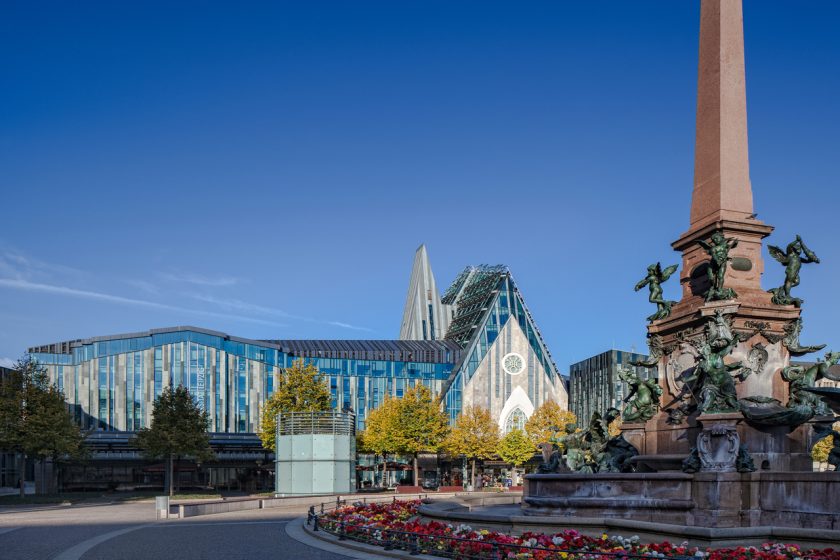
DIGRESSOR OF NORMS
Wednesday, 22 November 2017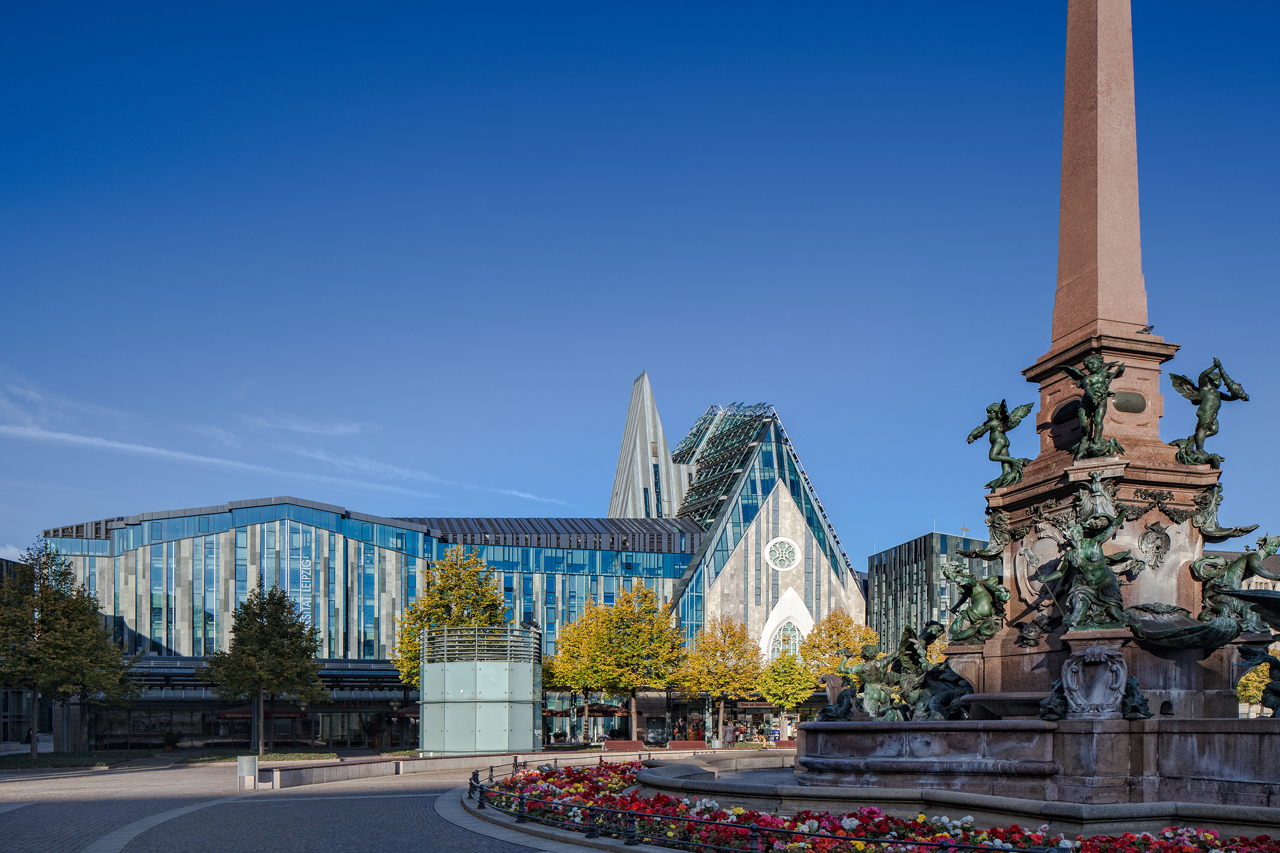
This interview was published in the magazine Design Detail in October 2017.
Team Design Detail in conversation with Architect Erick van Egeraat on his vision, ideas and design philosophies; his most famous projects such as The Rock Tower in Amsterdam, the Corporate University of Sberbank in Moscow, Drents Museum in Assen and ING Group Headquarters in Budapest.
Starting out as a group and later establishing your own identity, how hard and challenging were the initial years post Mecanoo for you?
It was a great time. Not hard or difficult at all; actually it was more like a cheerful liberation.
While at Mecanoo, my partners and I were able to successfully change the way of thinking about the added value of good design, more so in low-cost housing projects by early 1992 itself. It was a very specific moment in time. Directly after World War II, the construction industry in the Netherlands was entirely based on efficiency and economics.
Even as students in the 1970s we had started to think differently. And as young professionals in the 1980s we were able to force the Dutch urban development – and construction-industry to slowly shift its attention towards more historical awareness, towards aesthetics and quality of comfort. Most of all we promoted delivering what was dearly needed; a wide variety of new housing typologies. Netherlands was doing well and young architects were given opportunities; we were part of it and accepted the
new state of affairs wholeheartedly.
Personally, however, I also had become fearful of the limitations of the typical Dutch way of doing things. It suffocated me. It is a small country with very strong opinions about the rest of the world and with immovable values about what is good or bad; done and not done. Would I be stuck there for the rest of my life doing exactly the same things as I had been doing in the first 12 years of my young professional career!
We were indeed very young, successful and ambitious. That early success tempted and attracted new challenges. My desire to work elsewhere and on other projects had dramatically increased; now I had a drive to work on a more international scale.
This was quite important for me; I also desperately wanted to explore the potential of moving away from this nonstop pursuit of consensus with my partners. This so-called team work (which it had never been) did not allow me to explore a more diverse and more personal approach. I did not know what exactly, but I was vaguely looking for a
more challenging architecture. In the way working together like we did, I had to spent too much of my time bringing all ends together. From a highly stimulating environment, Mecanoo had started to feel like a massive amount of excess luggage that was stalling my own development. It sounds dramatic, bit I simply had to go.
I wanted to make all decisions alone. Not because I did not appreciate the input and qualities of other design architects at Mecanoo, but because I refused to be held back by (founding) partners whose design capabilities were not challenging at all. It was also very much a self-inflicted test; was it me or was it actually them who had overnight created this successful team of architects which we had become at such a young age? I could not care less if I would end up successfully or fail; I had to know.
Once the decision to separate and to start my own practice was made in February 1995 it all happened relatively fast. There were far more people who joined me than I strictly needed. The majority of the Mecanoo office followed me. The ones who stayed with my partners were the ones looking for stability; the ones who followed me were looking for excitement and challenge. And that is actually what still guides us. We entered into enticing times and it brought a kind of excitement that never left us.
Which project or event do you consider as the major turning point of your practice?
A profoundly forming event for me personally was a visit to the city of Dresden (Germany), considered one of the major cultural capitals of Europe. It is an epicentre of Baroque and Rococo architecture. During these first visits to Dresden in 1995 my ideas about “Modern Baroque” crystallized. An architecture that is not the reduction into the barest essentials of what constitutes a building; that is what modernism had become. Instead I was looking for an architecture that is layered, deep and soft like a pillow. An architecture that is sensual, rich, decorative, fashionable and above all, that has the capacity to inspire people. A highly expressive architecture that reconnects to the ongoing evolution of form, typology and innovation that took place in Europe for centuries in a row.
The first project in which this architecture materialized was “The Whale”, a restoration project for ING Bank in Budapest Hungary. We were asked to redevelop a fin de siècle neoclassical building into offices. The project started in the spring of 1992 and was fully completed in 1994. We meticulously extended, restored and designed a new interior of this bank up to the unique flooring, the furniture, and even the wallpaper; my first ‘Gesammtkunstwerk’. Such a project was unheard of at that time in West, East or Central Europe.
On top of the existing atrium we placed a zinc blob that was held into position by a glass roof entirely supported by glass beams and glass rods. It was very expressive and evocative. It was a very unusual restoration, but also a very suitable integration of the existing with the new.
The result was eccentric and the building soon became highly appreciated by an amazed and enthralled local community. This was my first Modern Barque building. Even though I hardly consider Modern Baroque a style or an approach which I feel the need to adhere to, the awareness of the power of such new architectural language had certainly opened my eyes to worlds entirely unknown. Following a rather strict modernist education in architecture, to work and build this building in Central Europe was a true revelation.
A second pivotal and more recent project is the Paulinum project in Leipzig, Germany; the new Leipzig University project that is now almost reaching its final completion. It is a highly charged project. Not only is the church part of one of the Europe’s oldest universities, where for example Luther preached and Bach played, but for centuries it has been the stage for free spirited intellectual discourse. By the mid 1960s, with the student riots in Paris and Europe and the world in unrest, this church had become a platform for the opposition within the DDR. Consequently, Secretary General of the German Democratic Republic, Walter Ulbricht decided to destroy this symbol of unrest and literally blew up the building in 1967! After the German reunification the University wanted to reactivate this site in the very centre of the city.
An earlier attempt at organising a design competition for this purpose failed. Later a second competition was organized. All entries either literally reconstructed the church, or contrary to this simply did not take the historic relevance of the original liturgical space and its weight for the Leipzig populace into account. As if the enthralling history
of this unique place never existed! Our project was the only one that proposed a hybrid solution. On onehand it is a very contemporary university building with at its heart a meticulously designed space that resonates the remembrance of the church, but on the other, it also provides the university with a multipurpose space for events, be it religious, conference, debate, academic events or otherwise.
We reinstated the gothic envelope of the original church, but alternatively chose to materialize the interior in modern materials such as glass, ceramics, and light effects. The old silhouette and completely white interior were embraced by all; Post Communists, religious and secularists alike. Combining two entirely opposite solutions for the
project (both a proper reconstruction of a church ánd creating a state of the art university) appeared to be the appropriate approach to stop decades of confrontational discussion. Those in favour of a full reconstruction are still heard, but by now mostly the choice to make a unique project free of dogma’s, has received widespread empathy and appreciation.
Being one of the very few architects who’ve worked in Russia, how do you categorize the pros and cons of working there? And what is that one thing that make you go back and work there again?
Russia is an extremely fascinating country. It is of course also very huge and very diverse. I have worked in different parts of the Russian Federation. We are currently working on plans in Krasnodar and Novosibirsk. I have always challenged stereotypes, in any project and in any country I work in. When working in Russia, like any country, some stereotypes are confirmed daily, and just as many are proven completely wrong. What immediately attracted me about Russia is that, it is in a constant state of flux, it is constantly on the move to redefine itself, to find new trends and blend them in with traditions. Many Russians are looking for new sensations and that makes them ambitious and at the same time very interesting clients.
Russia on the other hand seen from a Dutch or German perspective is quite unorganized, almost anarchist. It is a country of do-it-your-selvers. Russians know what they like, but learned well over the centuries to get what they wanted and get what they wanted at their own conditions as well. Well educated, almost all of my Russian clients have extremely high ambitions and expectations. But they are also often surrounded by staff and managers that either doesn’t understand their employer’s ambitions, or the personal goals that are not aligned with the ambitions of their bosses. The result is that realizing these projects remains a constant struggle or at least, a major struggle for a foreign architect who insists realizing the projects at the agreed levels of quality. We have always done so and are doing it now for 15 straight years in a row.
Achieving anything good in Russia is only possible by constantly being on top of it all. It demands constant attention from my own staff, but also my personal presence. Russian clients are notoriously high maintenance. That is a fact you have to accept and it means that none of the work could have been realized, if I would not have my own office and very committed staff there for many years.
What are your ideas or design philosophies of approaching a project? Could you use an example to illustrate the same?
We mentioned Modern Baroque in the beginning of our conversation. But such craving for a more sensual architecture should not be misunderstood as a predestined ‘one stylistic approach fits all’ attitude. I do not believe in it. Architects like Frank Gehry and the late Zaha Hadid choose to do so, but it is not me. I believe that I should be able to create different languages; sometimes, wild, loud and outspoken, but sometimes also soft, introvert and silent like in an intriguing movie.
My clients deserve my work to be specific; responding to the specific situation or challenge that my client faces. This could be an unusual business model, the unique context, historic connotation of a site, or all of it. We aim to turn these challenges into high potentials. Seen in this light, style is irrelevant. I have learned over the years that it is far more difficult to be truly different than to adhere to a stylistic principle. Once I stated that I hope I do not have a style; and when I am finally revealed or caught in the act for adhering to a stylistic paradigm, I hope it is when I have finished the last of my works.
Each client, each site or city, each socio-economic context is unique. I love that awareness about the world we live in; to be part of that great diversity and to be able to move freely around in it, makes me sensitive and understand how rich and truly privileged we are. To be able to formulate a customized concept, we always try to identify the specific aspects that are of importance and which influence the project. This research always takes a bit of time, but does not take months. It is not an academic exercise. The concept or leading idea for any of our projects is typically based on a very concentrated understanding of our Client’s and project-stakeholders’ challenges. Only after such first step is made, is it possible to start to design a unique building or project; one that all involved can embrace and support. That over the years I have had so many varied experiences and worked in a range of diverse countries is of course of great help – example, the Sberbank Corporate University in Moscow, Russia, with the Paulinum and University in Leipzig Germany. Would you immediately recognize them as the work of one and the same architect?
Who has inspired you the most in your professional years or in your years of being a student architect? And have you ever thought of becoming an academician?
As a student, and in the beginning of my career, I used to travel to the United States every year. During my trips I used to meet Ray Eames at the Eames office in St Monica. I was a guest at their (Charles and Ray Eames’) house in Los Angeles many times. I had the pleasure of visiting Eames several times until 1985; we had great conversations every time we met. She was wonderful. Charles had passed away already and Ray unfortunately died shortly after. Speaking with her was a revelation to me; it taught me more than all my years in university. She was the master of the arrangement. She taught me that functionality is one thing and that beauty should always compliment it; no innovation is successful unless it is made highly attractive. This was 25 years before Steve Jobs delivered the amazing I-Phone.
You have worked on many projects in various countries. How have you seen this as a challenge or as an opportunity?
It is in a certain way always both. We are always aware of one simple but complex question: What is different here? What can I offer that a local architect does not? Yes, I am a true globalist. But I believe that you should ‘act global’ and ‘think local’ as well. Do not imperialize. Despite the fact that we seem to enter an era of anti-globalisation, I consider lifting borders is the best thing that happened in our lifetime. I consider it a privilege to be part of this unique era in which exchange between people and countries
takes place in an ever increasing frequency.
Talented people with good experience and good ideas can contribute valuably in contexts that are actually alien to them. In my experience this new order also breaks down mental and physical boundaries for the local architects. Sometimes people are more willing to listen to a good idea when a foreigner or an outsider brings it. But working elsewhere is also a humbling experience. I learn a lot from the countries I work in; Germany shows me how to build well; Russia taught me how to appreciate the value of
what we can achieve and create.
How were you able to come up with the interesting design of the waste-to-energy plant?
When the city of Roskilde decided to initiate a design competition for a waste-to-energy plant or a so-called incinerator, we were very happy to bring a proposal that turns something that is associated by definition with unattractiveness and ugliness, into an icon of progress. Even though the project was highly appreciated for its added sustainable value, not everyone was happy to see something that big being built in such a small city. It was an obvious local reservation against a global value. We understood that something was needed to be done to make people proud of what could potentially be an industrial monster. So we decided to make a cathedral of energy and light. We gave the building a unique shape and façade that radiates positive energy; the light effects on the façade emulate the transition from waste to energy. We were lucky that the building later became the orange beacon for the yearly music event the ‘Roskilde festival’. An international and global idea of sustainability became a local icon.
What is your view on the commodification of art and architecture? How do you maintain a balance between market demands, client demands and personal design satisfaction?
For me there is no such dichotomy. There is no contradiction between my creative appetite and constrains I meet when realising them. For me it is one and the same. Let me explain – art and architecture are obviously not the same. The classic view is that architecture is the “mother of all art forms”. The statement is indeed a bit pompous, but it intends to express that architecture unlike any other cultural expression focusses on the essentials of our civilisations.
That should not be confused with a sort of malevolent pecking order of architecture over art. The stubborn misconception is that the freedom of the artist to follow his own paradigms is the essential prerequisite for the success of his work. That consequently creates this idea that the true artist is “free” and the poor architect is “constrained and restricted”. Nothing is less true. Both have an obligation to fulfil a proper purpose. If there is a difference between the two positions then that might be the freedom of the artist to appoint oneself to the creation of an art work. But visionary architects over the centuries have proven it false.
How has product designing helped you to better realize architecture in its fullest form?
Product design for me basically is not much different than working meticulously on building details. I love it. Focussing on the actual realisation of a product or a detail gives huge satisfaction. I personally believe that an architect’s capabilities are best measured by his ability to get down to the details. Not to do visionary architects short, but after all the role of an architect is to be the chief builder. For me the storyline, the concept, and the very last details are equally important. Both should be realized very well to consider it a work piece of architecture.
We came to read about your concept of Dynamo project in Russia. How well was that actualised? Could you share the same with us?
The idea for this stadium (or actually group of two stadiums) was to find a commercially viable model that would allow such big complex to survive after it was realized. Soccer stadiums that could accommodate more than 45.000 spectators are not viable. Adding a smaller 10.000 multipurpose arena will help to make the complex more versatile and able to cater for events year round and thru-out the week as well. To this complex we added a huge shopping centre and entertainment facilities that was meant to be built within the existing Dynamo stadium. It was commonly considered a workable and welcome proposition. Russian politics, but especially the decision not to include this building in the 2018 World Cup finally stopped the project.
You’ve shared your views of value against money in one of your articles. Do you feel many a time architects become insensitive when it comes to choose between the two?
The issue of value for money is extremely important. The majority of people around the world live in buildings that are flawed; buildings whose costs are no longer in any relation to their true material value. I have seen myself that this is very true in India as well. Luckily to the opposite, in India there are other achievements which are again hugely undervalued.
Even after centuries we are not improving our construction industry. It is remarkable to see the buildings from 18th and 19th century (and even buildings as old as 500 or several thousands of years) still out doing the majority of buildings that have been completed over the last 20 years. We are not moving forward; at least not fast enough. We could do much better.
Architecture, and especially construction industry is in that sense very slow. We can launch satellites, communicate with anyone on this planet within a fraction of a second for free, we can build cars that drive themselves, and that automatically notify the garage when a repair may be needed. Yet, we still construct primitive with bricks and cement, and we still find it somehow acceptable that buildings are flawed, construction quality is low and that we pay much more for those buildings than they are actually worth.
I see only one way out of this stalemate: making truly intelligent buildings that make our communities and lives better, healthier and much more sustainable. I am currently working on some projects in Europe that I trust will set new standards in sustainability, construction method, and information technology. I would be happy to tell you more about them very soon.

