
Erick van Egeraat beyond architecture
Erick van Egeraat is a Dutch architect and author. He heads the architectural practice based in Rotterdam with offices in Moscow, Budapest and Prague. He is the winner of RIBA Award 2007, Best Building Award 2011 & 2012 and European Property Award 2013.
Six Ideas About Architecture – Texts by Deyan Sudjic for Erick van Egeraat Associated Architects
22 July 2026WATCH ERICK VAN EGERAAT’S LATEST LECTURE ON SHAREarchitects.com
04 June 2020DIGRESSOR OF NORMS
22 November 2017Erick van Egeraat in dialogue on 100th Catholic Day in Leipzig
30 May 2016Column: Thoughts from an Architect
27 May 2016Column: Value (f)or Money
Column: Life without Beauty
Grigory Revzin: The Street Leading Upwards
16 February 2016De hele wereld loopt sneller dan Nederland
07 December 2015Making affordable housing more attractive
06 November 2015We leven in het Luxe Tijdperk, en daar bouw ik naar
03 September 2015Interview: Russia can do much better, with or without international support
01 August 2015Interview: Waarom architect Erick van Egeraat successvol is in Rusland
29 June 2015Effortless Everywhere
24 June 2015Luxury living concept in Mercury Tower, Moscow
14 June 2015Memories for the Future
01 June 2015Interview: New Impulses
14 April 2015Galvanize the City
07 March 2015Nieuw stadion Feyenoord wordt gegarandeerd een kutgebouw
01 March 2015Interview: Tastes differ
19 February 2015Interview: If you think I’m genius, I wouldn’t mind
14 November 2014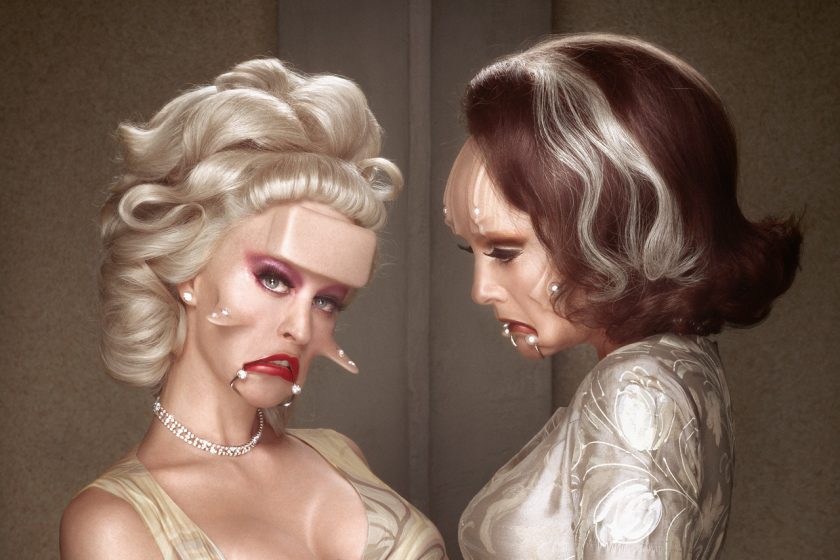
Column: Life without Beauty
Friday, 27 May 2016During 4 years, between 2008-2011, Erick van Egeraat published his articles in the magazine Commercial Real Estate Russia. This column was published in October 2011
LIFE WITHOUT BEAUTY
Over the last 30.000 years humanity has produced an uncountable number of contributions to life on earth which are simply beautiful. Was it for any reason? Of course! We were able to escape extinction not just thanks to our intelligence, but thanks to our ability to use our brainpower both to survive and to create Beauty! But why we have lately changed so much? Why we have become so afraid of Beauty?
We live in a truly unique century. Currently in a new world we travel wherever we want to go to and we can experience or learn about almost everything that appears or happens somewhere at any time and at our own convenience. So yes, it is an entirely new world. Still young of age, in comparison to our earth’s existence, civilization has finally entered into a stage which knows no boundaries. For the first time in history individual human beings can consider the whole world their home. Overcoming not just physical, but also many political and ideological borders, globalization has become a fact, like it or not. But this newfound freedom has already proved to be finite. Unlike our ancestors we do not picture this newly discovered territory as a valuable asset, but we consider it a serious threat. In some measure, it reveals the bent of our natural instinct to picture the opposite side of the coin; instead of setting our sights on opportunities, we seem to focus on limitations. What appears the biggest menace is that on top of this we portray our new global community predominantly in financial terms. And the resulting picture is not beautiful. When on financial side things do not go well we conclude that the world does not go well. We developed a crisis mentality which cuts to a bare minimum our ability to behave truly social, to enjoy life and above all limits our aspiration to create Beauty!
Since the publication of my first article for CRE in 2008 the world has changed. We have hardly overcome one surge of crisis and are ready to announce the second wave coming. Most of the public discourse, whether home or abroad is about financial questions. We have made our lives predominated by our view on the markets. The market! Since when is the market the only thing that matters? Why do we confine our world view to market behaviour? And what is the market? Traditionally it has been a vulgar place of purely materialistic nature which focused on the trade of goods and left spiritual values out. Traditional markets however, also played an important social role, whereas the financial market of today is hardly a place of social events. The market is no longer a place for exchange of ideas – the market itself has become an ideology. We believe in it, we surround us with people who read the markets for us, who know all about them and confirm to us that the market is always right!
Obviously, there is no value in depreciation or blunt denial of the present problems with the world and its economy. We are not doing well, globally. And yes, there is clearly something very wrong out there. But we are not speaking about the end of our existence when we discuss the problems surrounding our global economy. We do not (at least not in the western and upcoming economies) debate being deprived of food or shelter. In this context we speak of our welfare, rather than about the threat to our bare essential needs. What lies in the root of our debate: a wish of money? More money to buy us what? The answer “health” would be fairly understandable, but this is not the case, curiously. It would be great if we would generally be willing to spend more on our health and on environment; but that seems even in the most advanced economies still more wishful thinking than reality. Repeated studies have demonstrated that willingness for people to spend on their healthcare is dramatically low. Of all expenditures, health (even for those focused on their own physical well-being) comes at a poor fifth place after food, housing, clothing and luxury goods………Paradoxical token of modernity is that we strive after luxury, but attack Beauty. The fierce offensive on this essential value that marks contemporary life in the new world economy is not at the last place a result globalisation.
In the new world Beauty lost its universal appeal and acquired millions of local, individual, particular notions. We consider it something to dispute about, but not something to fill and orchestrate our lives. We alienate ourselves from Beauty. On the one hand we think we can’t afford it and disregard it as a toy for the happy few of our societies. On the other hand, we believe that we must not wish to afford it, because the world economy is experiencing serious problems. As a result, when we reflect on the subject of Beauty, our immediate reaction is to deny this one of our most fundamental needs. Has it ever occurred to you that in our contemporary world we hardly ever address Beauty? Over since the last century we prefer to refer to minimalistic values. It sounds better. Designers speak about pure, essence, cool and the minimum. On the front page of the Herald Tribune of the 7th of October 2011 the editors’ tribute to Steve Jobs writes about ‘the genius that imbued technology with simplicity and style! Simplicity! Is it so hard to state that Steve Jobs aimed for a beautiful life and wanted to create Beauty? We really are afraid of Beauty. But is this a right thing to do? If we pry into the history, we will see that our concept of Beauty helped to lay foundation of our civilization.
The true origin of our concept of Beauty has been subject to many discourses. Many have argued against it. But these argumentations are most of all convenient falsifications, as Umberto Eco pointed out so skilfully. In many of his essays the Italian writer and expert in semiotics elaborated, that we are so obsessed with falsifications because they are often much more convenient than truth. Modern technocratic thinking would rather concentrate on utility and functionality, than embrace the idea of Beauty as an essential necessity in no need to excuse itself for its existence.
In his introduction to an exhibition about my own works of architecture the Dutch philosopher Roland van Vliet stated that our desire for Beauty and Perfection originates from human imperfection. Following Plato, he remarked that the idea of Beauty slumbers in our soul’s intuition; an universal strive for improving what surrounds us. So yes, we do know in the depths of consciousness what Beauty is, but how does it work?
As human perception is based on sensations, we can create an entirely subjective worldview based on our emotions. This way we have evolved to where we are now. But our increased ability to reason, to construct or to make use of our intellect does not diminish our desire for Beauty. That is to the contrary. The success of Steve Job’s IPhone or IPad would not appear, if these products were a mere result of his technological skills. It was his recognition that we need to be allowed to truly appreciate or fall in love with a new technology seen from all perspectives; and good looks are an undeniable part of it. It would be flaccid to say Beauty sells. It would not hurt however to acknowledge that Beauty is value.
And Russia? Can Russia do without Beauty? No! Russian soul, more than any other aspires for Beauty. Especially in this part of Europe Beauty is not just a concept for pleasure; it has long time been an integral part of life and society. Russia’s problem in this perspective is however not different from the rest of the world which is overtaken by the falsifications of the capitalistic markets; the common belief that something is only really good when endorsed by the financial markets. After all, ultimate measure for society or human being is not ability to make money, but its achievements and the Beauty it has produced.
So, now go and make value by creating Beauty and/or by disclosing and promoting Beauty wherever it is present. In Russia you can reveal a glimpse of Beauty everywhere; you just have to look closer. Take the Moscow metro: this magnificent creation gives one a glimpse of eternity every time. Too bad that this Beauty cannot be experienced by everyone. I would happily contribute to redesign the Moscow metro signage and make Moscow metro stations bilingual, thus improving Russia’s friendly international image … Let someone have the Moscow mayor read this article: if Plato was right, then I’m sure that his intuitive understanding of Beauty will make a way for implementation of true concept of Beauty in Russian life.
October, 2011
Tiffany van Egeraatova in Le Dernier Cri, copyrights: Erwin Olaf, www.erwinolaf.com

